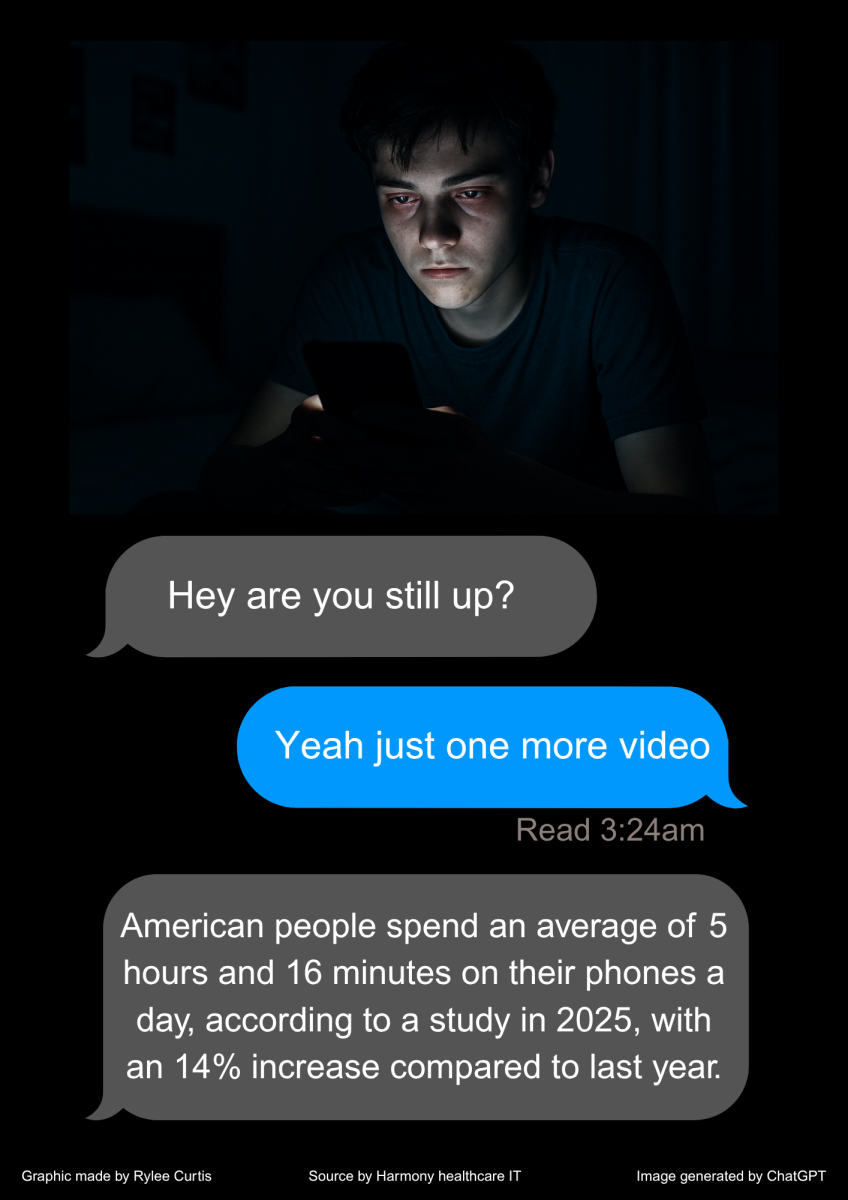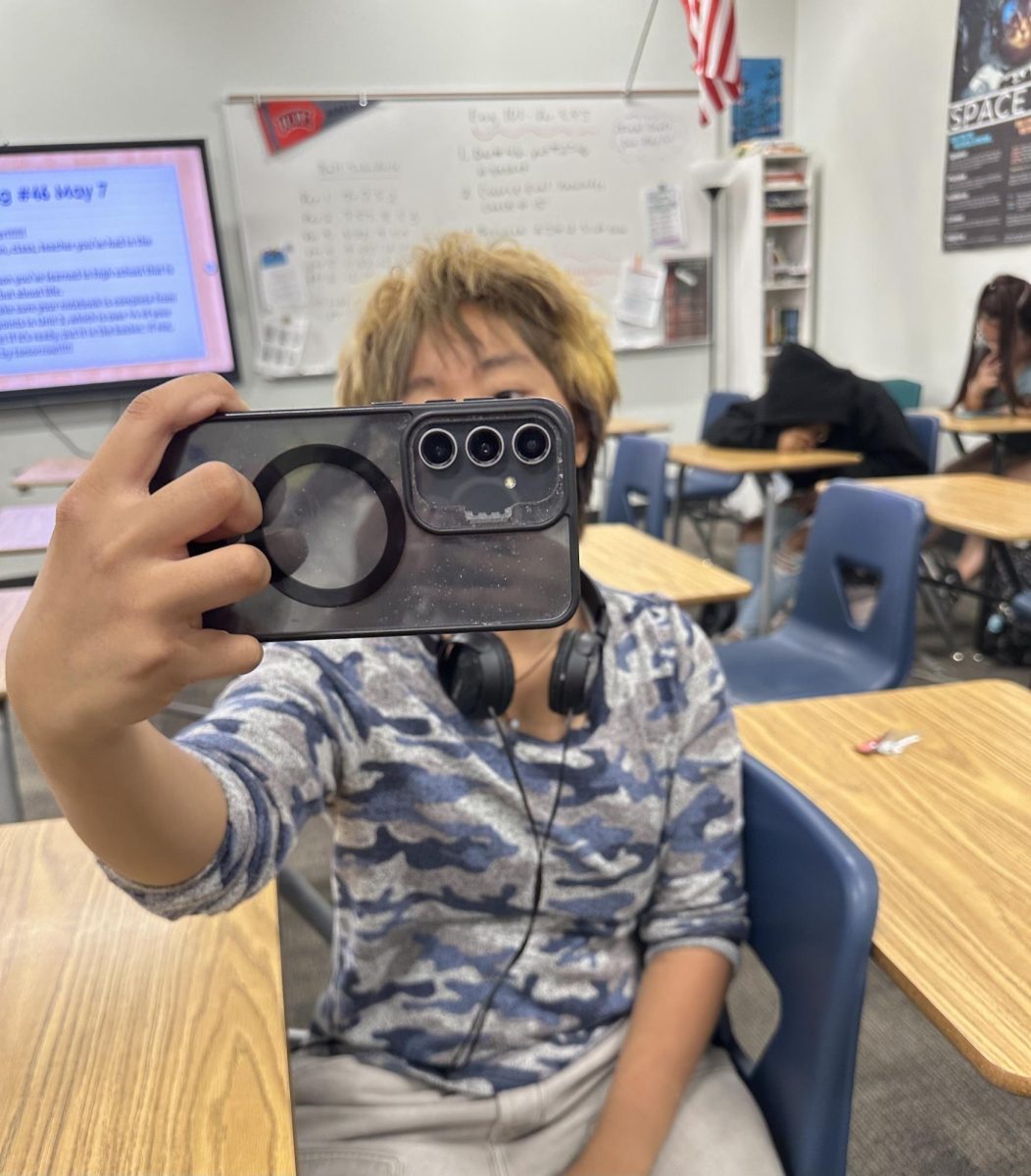
Despite the new Clark County School District (CCSD) rules cracking down on students using their phones during class, little seems to be working when faced with students who refuse to put them away. Phones are a constant presence around Silverado–and have been for years.
Noticing the lasting attachment, we, Star reporters Connor Biondi and Gabriella Pedriquez, decided to test the theory out: Just how attached is our generation to technology?
The task was clear – no phones for a day. That being decided, we took our phones and placed them in a drawer, promising not to touch them until night came.
At first, it was quite easy for us. However, as the clock ticked towards early afternoon, we experienced some troubles. The realization of how involved phones are in our daily lives began to dawn on us.
For Biondi, calling and texting were top priorities.
“My phone is always on me. I use it to talk to people every day,” Biondi said. His phone was his main line of communication, like calling his dad to ask about his plans or texting his coach about being late to practice.
Pedriquez, on the other hand, struggled a bit more as she regularly used her phone for more than communication. She used her phone beyond messaging, oftentimes scrolling on TikTok or watching police chase videos on YouTube when seeking entertainment.
“I go on my phone without realizing I am. It’s just automatic and like a routine for me,” said Pedriquez when reflecting on her phone habits.
We both found one thing in common during the experiment: the habit of reaching into our pockets for our phones, even though our phones weren’t there.
“I kept reaching in my pocket and would get nervous when I didn’t feel my phone. Then I remembered the whole experiment,” Biondi said. Causing some frustration from realization, we knew that this was a part of the process. We stuck it out, wanting to genuinely commit to the experiment.
In turn, we decided to carry on with the day, finding alternative ways to ease the boredom. As there was no way to communicate as easily as we would with a phone at hand, we relied on in-person social interaction as our only way to communicate. Interaction was still there, if not stronger. Although we both were attached to our phones, we realized that being able to speak to each other in person allowed for the opportunity to talk, laugh, and be present in the conversation without distractions interfering.
“I feel like I actually paid attention to what was around me,” Pedriquez said.
Biondi added, “It seemed like I was talking for so long, and our conversations felt more real if that makes sense,” when reflecting on their experiences throughout the day.
For the first time in a while, Biondi and Pedriquez had to find other ways to entertain themselves–one way being board games or simply talking face-to-face while at the park. Without their phones to rely on, they both came up with other ways to pass the time.
“It was a bit difficult to come up with ways to keep busy at first, but then we just went to the park and sat on the grass, enjoying each other’s company,” Biondi said.
Throughout the experiment, we became more observant of their surroundings. While at the park, we took notice of more than just what was on the screen. Unlike quick pictures and video clips seen on social media, these moments felt real and lively. We noticed kids laughing on swings, dogs playing fetch, and people riding bikes. For the first time in a long time, we stepped outside and took the time to be in the warmth of nature’s beauty around us.
At the end of the experiment, neither of us felt urgency to grab our phones right away, later causing us to spend an extra hour without them. Social media interactions weren’t on our minds at all at that moment. Being able to unplug from years of phone addiction allowed us to go to bed earlier and sleep better than we had in weeks. The attachment still lingered but settled as our day passed, allowing a calm appreciation for peace and presence.
Finally reaching the end of the experiment, Pedriquez said, “It felt relaxing without my phone. I didn’t worry about seeing what was on my feed the whole time.”
Biondi agreed.
“I didn’t know I relied on my phone that much,” he said. “This experiment showed me that.”